The Center for Culture, History, and Environment (CHE) and at the University of Wisconsin-Madison is part of the Nelson Institute for Environmental Studies that draws together faculty, staff, graduate students, and others from a wide array of academic disciplines to investigate environmental and cultural change in the full sweep of human history.
CHE provides a place where a community of scholars from a variety of disciplines and backgrounds can share insights and explore the past and present relationships between humans and the environment.
To read an overview of what CHE is and what CHE associates do, please visit the What is CHE? page.

If you are interested in joining our email list, or for more general information about CHE, contact us at che@mailplus.wisc.edu.
Graduate students can apply to be an associate or to join the certificate program. Learn more on the graduate student affiliation information page.
Faculty members can apply to become a CHE associate. You can learn more about that on the faculty affiliation information page.
CHE Colloquium meetings and most other CHE events are open to the public. E-mail us to sign up for the CHE listserv and check the Homepage and Colloquium page to find out when CHE events are being held.
Find out more ways to get involved on the community member information page.

CHE has been made possible through the generous gift of a donor who wishes to remain anonymous.

After a great spring semester, we've blocked out the colloquium dates for the next academic year. Please add these dates to your calendar now, and check back over the summer to see specific topics as they are updated. One of the primary goals of the colloquium is to create a genuine intellectual community in CHE. We hope interested faculty members and graduate students will make a serious commitment to participate in the Colloquium as regularly as possible.
Be sure to check out the full schedule here, and protect the dates as best as you can. We look forward to seeing you there!

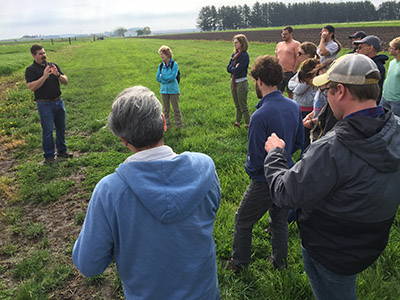
This year's place-based workshop takes urban agriculture in Madison and Milwaukee as its focus, examining the people, landscapes, and institutions that produce food in the city. In and around Madison, highlights include visits to the Center for Resilient Cities; the Linda & Gene Farley Center for Peace, Justice and Sustainability; and Community GroundWorks. In Milwaukee, the group will visit Growing Power, the Urban Apiculture Institute, Alice's Garden, and Walnut Way. Stay tuned for photos and reflections to come!

The Spring 2013 Graduate Art Show is now displayed in the lobby of Bradley Memorial (1225 Linden Dr.). It features artwork from own Chelsea Cervantes De Blois (Department of Languages and Cultures of Asia), Courtney Glettner (Agroecology, Sarah Dimick (English), Kevin Gibbons (Geography), Spring Greeney (History), Rachel Gross (History), Christina Matta (Technical Communication), and Becca Summer (Geography). Download artist bios here (PDF).
In the spirit of CHE, ArtFeast includes artistic works made by graduate students from departments across campus who explore the intersection of culture, history, and the environment. Although many of us know each other through our academic work, we rarely have the chance to see the artistic talents of our peers; this show provides an outlet for such nontraditional means of expression.
The theme "ArtFeast" was intended to motivate thinking about ideas of nourishment. How do people find fulfillment through eating, farming, ritual, or art? What does it mean to feast? We are thrilled with the varied responses to our open call for artistic works exploring these questions.
Join us for the art opening celebrating this new exhibit: On Friday, March 1st, from 5:30-7, we'll have drinks and cheese and music. Admire the beautiful artwork, catch up with all your CHE friends, and unwind at the end of a very busy week. Bradley Memorial Building (1225 Linden Dr.)


CHE Grad Kevin Gibbons has been leading a class called "New Media for Environmental Communication," a special subsection of GEOG/NIES 339, "Environmental Conservation."
In Fall 2011 the class produced nine short films about conservation and sustainable living. You can view the films here.
In Spring 2012, the class continued its exploration with a shared course blog called environment and media--please check it out, add it to your blogroll, and spread the word.


Photo by William Cronon
Recently, CHE launched its new "community associate" membership. This new status recognizes folks engaged with CHE who are neither faculty or graduate students at UW-Madison.
Community associate status is open to anyone in the campus community and beyond whose work and interests similarly address questions relating to culture, history, and environment that define the Center's activities.

CHE is pleased to share a mini-site called "Landscapes of Health." Created by participants in CHE's 2011 Place-Based Workshop and students in the methods seminar, this site collects digital short films and eclectic reflections on health and place.
We hope this site will serve as a useful study guide for thinking about human and environmental health as more than the presence or absence of disease – but as part of broader cultural, social, historical, and environmental relationships
Check out the site here
For "Stories of Health and Place" digital short films, click here


CHE faculty associate Jess Gilbert was elected as CHE's new director in May 2011. Jess is a Professor in the Department of Community and Environmental Sociology and the Land Tenure Center, and has been part of CHE since its inception. Jess takes the reins from Bill Cronon, who served as director from 2008-2011. Congrats Jess!

CHE's graduate associates have put together an exciting resource for those interested in studying the environmental past and present.
Using prelim lists from the departments and programs that CHE grads call home, this collection serves as a useful introduction to CHE's interdisciplinary approach to environmental issues.
Be sure to bookmark this page and pass it on.